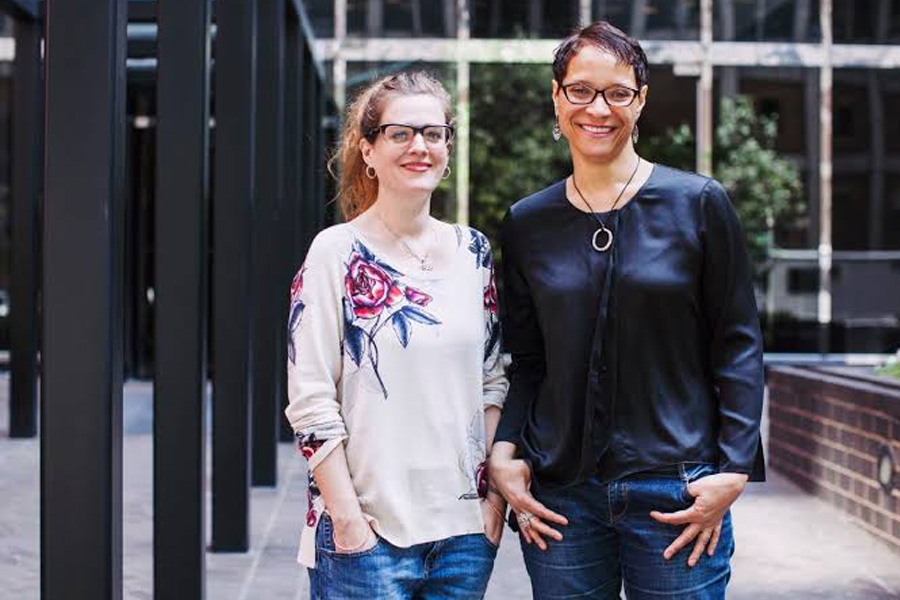
Who Is Leah C Gardiner
Leah C. Gardiner, an American theater director, writer, actor, and producer, is known for her innovative staging, physical storytelling, and ability to simplify complex dramatic texts. She is a respected Off Broadway, Broadway, regional, and worldwide performer and Obie Award winner. Family, race, gender, trauma, and the many ways individuals communicate when words fail are her subjects.
Gardiner directs with intellect and energy. She watches performers walk, stand, and show their bodies while conversation is silent. Her productions’ piercing clarity has garnered critical acclaim.
Gardiner prioritizes meaningful theater above celebrity. Her career shows how directors can influence audiences without dominating the stage. She crafts the movement, provides the framework, and lets performers express the emotions behind the lines.
Her versatility in directing modern plays, Shakespearean dramas, musicals, and revivals makes her famous. She has had a distinct artistic expression on Off Broadway and institutional theaters.
Leah C Gardiner Basic Information
| Category | Details |
|---|---|
| Full name | Leah C. Gardiner |
| Profession | Theatre director, writer, actor, and producer |
| Nationality | American |
| Education | University of Pennsylvania and Yale School of Drama, now the Geffen School of Drama |
| Undergraduate degree | Bachelor of Arts in English and Physical Anthropology |
| Graduate degree | Master of Fine Arts in Directing |
| Major award | Obie Award for directing |
| Spouse | Seth Gilliam |
| Son | Jonah van Alstein |
| Artistic specialties | Contemporary drama, Shakespeare, musicals, and theatrical revivals |
| Professional affiliations | Stage Directors and Choreographers Society, SAG-AFTRA, and The Writers Lab |
| Known productions | born bad, for colored girls who have considered suicide / when the rainbow is enuf, and If Pretty Hurts Ugly Must Be a Muhfucka |
Some biographical details remain uncertain. Gardiner’s official website has listed a birth notation of 1986 in Hong Kong, but that information conflicts with the chronology of her documented professional career, including Broadway assistant directing credits dating to 1998. Her exact birth date and birthplace therefore cannot be confidently established from the available information.
Early Life and Educational Background
Gardiner’s early experiences helped shape the intellectual curiosity and observational skills that later became central to her directing. Although she has kept many details of her childhood private, she has spoken about growing up with five brothers. Being the only sister in a large group of boys gave her a personal perspective on male relationships, communication, and behavior.
That experience became a useful point of reference in her theatrical work. Directors must often understand characters whose backgrounds differ from their own, and Gardiner has drawn on family observation to approach male perspectives without reducing them to stereotypes.
Her academic journey began at the University of Pennsylvania, where she studied English and Physical Anthropology. The combination offered an unusual foundation for theatre. English encouraged close attention to language, literature, and dramatic structure, while physical anthropology provided another way to consider human behavior, bodies, and social relationships.
She received the Sol Feinstone Senior Award for Social Change, an honor consistent with her interest in the relationship between artistic expression and broader cultural questions.
Gardiner continued her training at Yale School of Drama, now known as the Geffen School of Drama at Yale University, earning a Master of Fine Arts in Directing. Her graduate education helped develop the practical and conceptual skills required to transform a written script into a fully realized performance.
Her approach suggests that theatre is not simply literature spoken aloud. It is a living arrangement of bodies, voices, images, and silences.
Leah C Gardiner’s Family and Personal Relationships
Gardiner maintains a relatively private personal life, sharing information about her family primarily when it intersects with her professional experiences. Nevertheless, two relationships are known to have played important roles in her life: her marriage to actor Seth Gilliam and her experience as a mother.
Her family life also provides context for the sensitivity with which she approaches stories about parenthood, identity, and the emotional contradictions within households.
Marriage to Seth Gilliam
Leah C. Gardiner is married to American actor Seth Gilliam, whose career spans television, film, and theatre. Gilliam is widely recognized for roles in The Wire, Oz, The Walking Dead, and Teen Wolf.
Their marriage brings together two artists who understand the demands of performance from different professional positions. Gilliam works primarily as an actor, while Gardiner shapes the larger theatrical vision that guides actors and production teams.
Their professional paths have occasionally intersected. In 2011, Gardiner directed Gilliam as Othello at the Houston Shakespeare Festival. In 2013, she directed him in Antony and Cleopatra, again bringing their professional and personal lives into the same creative environment.
Working together as spouses can create unusual challenges. A director must make artistic decisions based on the production rather than personal relationships, while an actor must respond to direction with the same discipline expected in any professional collaboration. Their shared experience in theatre offers a foundation for understanding these responsibilities.
Gardiner has discussed the importance of supporting one another’s careers while managing family life, including periods when work takes them to different coasts. Their arrangement illustrates the practical balancing act faced by many couples in the performing arts, where opportunities frequently require travel and extended time away from home.
Her Son Jonah van Alstein
Gardiner and Gilliam have a son named Jonah van Alstein. Gardiner mentioned him in her 2011 Obie Award acceptance speech, and a 2013 interview referred to her as the mother of a young son.
Beyond these references, the family has maintained considerable privacy around Jonah’s life. Information about his education, age, and professional interests is not sufficiently established to support detailed claims.
Parenthood offers another lens through which to understand Gardiner’s interest in family dynamics. Her productions frequently explore the ways people protect, disappoint, influence, and misunderstand one another. These themes are common to theatre, but they can acquire particular emotional depth when considered alongside the responsibilities of raising a child.
Still, her artistic choices should not be reduced to autobiography. Gardiner approaches plays through research, collaboration, and interpretation, allowing individual stories to develop their own meanings.
Her Five Brothers
Gardiner has described herself as a sister to five brothers. This family background has informed her reflections on understanding men and directing male-centered material.
For a director, observing how people express affection, compete, argue, or avoid difficult conversations can become an informal education in human behavior. Gardiner’s experience growing up among brothers may have offered an early opportunity to observe these patterns at close range.
However, she has not made her family relationships the center of her public identity. Details about her brothers, parents, and extended relatives remain limited.
Leah C Gardiner’s Career in Theatre
Gardiner’s career expanded through assistant directing, institutional residencies, new-play development, and large stage performances. Her work has long included both traditional and contemporary dramatists.
The Stage Directors and Choreographers Society accepted her in 1998. Assistant directing on Broadway’s On the Town in 1998 and The Goat, or Who Is Sylvia? in 2002 were early credits.
She was a director-in-residence at the Public Theater and New York Shakespeare Festival in 1998 and 1999, and at New Dramatists from 1999 to 2000.
Early appointments placed her in institutions that support artistic experimentation and fresh theatrical voices. They also helped with competent production logistics.
Gardiner directed plays at small experimental venues to large regional theaters in the US, England, and Japan.
She has performed at Manhattan Theater Club, Atlantic Theater Company, Berkeley Repertory Theater, Alliance Theater, Oregon Shakespeare Festival, Studio Theater, Playwrights Horizons, and the Public Theater.
The Obie Award and Her Breakthrough Production
One of Gardiner’s most significant achievements came in 2011, when she received an Obie Award for her direction of born bad by debbie tucker green at Soho Rep.
The production demonstrated her ability to communicate emotional complexity through carefully controlled movement and striking visual compositions. Rather than relying on elaborate scenery, she used minimal elements, including chairs, along with carefully timed blackouts and tightly structured scenes.
The result made physical behavior an essential part of the storytelling. A pause could become an accusation. A gesture could carry the weight of a family history. Silence could communicate what characters were unable or unwilling to say.
The production received critical acclaim and helped establish Gardiner as a director with a distinctive theatrical language.
Her achievement was not simply a matter of staging a powerful play. She created a performance environment in which the audience had to pay attention to the smallest shifts in behavior, recognizing that the most revealing moments often occur between spoken lines.
Her Approach to Physicality and Text
Gardiner’s directing philosophy rests on the relationship between language and the human body. She approaches scripts as both literary works and physical blueprints, considering how words interact with movement, space, rhythm, and silence.
She has identified Jerzy Grotowski as an important influence. Grotowski’s theatrical practice emphasized the actor’s body, voice, and disciplined presence rather than elaborate production machinery. Gardiner’s work reflects a related interest in stripping performance down to its essential elements.
In her productions, actors are not merely delivering dialogue. They are creating images through posture, distance, movement, and stillness.
Her staging of Roy Williams’s Sucker Punch at Studio Theatre demonstrated this approach through physically demanding fight sequences. Choreographed action became a central dramatic force, communicating aggression, vulnerability, and social tension.
She also brings a classical sensitivity to contemporary language. When directing Tori Sampson’s If Pretty Hurts Ugly Must Be a Muhfucka at Playwrights Horizons, she worked with a script whose language moves between poetry, comedy, folklore, and social criticism.
Gardiner’s task was to find a theatrical form capable of holding those shifts together without flattening their differences. Her solution drew on the attention to breath, rhythm, and dimensionality associated with Shakespearean performance while preserving the play’s contemporary energy.
Directing for Colored Girls and Celebrating Collective Voices
In 2019, Gardiner directed Ntozake Shange’s for colored girls who have considered suicide / when the rainbow is enuf at the Public Theater.
The production became another major milestone. Shange’s work combines poetry, movement, music, and dramatic expression in a form commonly described as a choreopoem. It resists the boundaries of conventional narrative and depends on the interaction of multiple voices.
Gardiner approached the material as a living theatrical work rather than a museum piece. She reexamined its structure, incorporated additional poems by Shange, and collaborated with choreographer Camille A. Brown and ASL director Onudeah Nicolarakis.
Movement, spoken language, and sign language became interconnected elements of the production. Circular arrangements and communal groupings emphasized the relationships among the women, creating stage pictures that suggested solidarity without erasing individual experiences.
The revival received a Lucille Lortel Award for Outstanding Revival and five Antonyo Awards, including Best Revival. It also received Drama Desk and Outer Critics Circle recognition, further strengthening Gardiner’s reputation.
The production demonstrated her commitment to centering Black women’s stories while allowing poetry, choreography, and theatrical form to work together as equal expressive forces.
Writing, Film, and Television Projects
Gardiner’s creativity goes beyond stage direction. Writing, acting, producing, and filming have allowed her to explore numerous storytelling genres.
She wrote Cultures Collide, a Sony Entertainment-produced musical production for Congress. She uses performance to highlight cultural issues beyond typical theater audiences in the project.
She was an associate producer on Danai Gurira’s 2013 Sundance Film Festival Cinematography Award-winning drama Mother of George.
The Alliance Theatre’s Belle of New Orleans and Arena Stage’s WHY are among her short-film directorial credits. She played herself in Ira Sachs’ Little Men with Greg Kinnear.
Gardiner shadowed The Walking Dead and Tales of the Walking Dead to seek television prospects. These experiences help enter the collaborative world of television directing, where pacing, continuity, camera placement, and production timelines differ from live theater.
With British writer Roy Williams, she developed musical adaptations, original musicals, and television projects. She has considered adapting Alexander McCall Smith’s No. 1 Ladies’ Detective Agency series and creating a musical with Robert O’Hara for George C. Wolfe and Warner Bros. Theater Ventures.
Her development work includes adapting Rupi Kaur’s writing.
Leadership and Professional Recognition
Gardiner’s influence extends beyond individual productions. She has served in leadership roles within the professional directing community and supported organizations concerned with artistic development and representation.
Her longstanding involvement with the Stage Directors and Choreographers Society reflects an investment in the working conditions and professional interests of directors and choreographers.
She has served on the organization’s Executive Board and held the position of National Executive Secretary, also described as Secretary, during recent board cycles.
She has additionally served on the Executive Board of The Writers Lab, an initiative supporting women screenwriters. Her professional affiliations have included New York Theatre Workshop’s Usual Suspects program and an Affiliated Artist relationship with Soho Rep.
From 2016 to 2021, she served on the Board of Trustees of Speyer Legacy School in New York.
These responsibilities reveal another dimension of her career. Theatre depends on more than individual creative achievement. It also requires institutions, mentorship, collaboration, and sustained support for artists who are developing new work.
Leah C Gardiner’s Net Worth and Financial Background
There is no reliably established public estimate of Leah C. Gardiner’s net worth. She has not built a public identity around personal wealth, commercial endorsements, or celebrity lifestyle coverage.
Her professional income may come from directing fees, writing commissions, producing work, television development, and other creative engagements. Directors can also receive compensation for institutional appointments, workshops, consulting, and related professional activities.
However, individual contracts and earnings are not publicly documented in sufficient detail to calculate her total assets or annual income.
Her career includes prestigious awards and productions at recognized theatres, but artistic reputation does not automatically reveal financial circumstances. Theatre professionals may experience variable earnings because projects differ in duration, scale, and funding.
Without verified financial disclosures, assigning Gardiner a specific net worth would be speculative.
Recent Professional Activities and Continuing Influence
Leadership, artistic growth, and theater and television productions have dominated Gardiner’s career.
The Stage Directors and Choreographers Society has kept her interested in industry issues impacting directors and choreographers. The Writers Lab exposes her to writers’ assistance and screenwriting opportunities for women.
Her earlier productions remain popular because of their cohesive style. While born terrible is her breakthrough, for colored girls shows her ability to rework an established piece for a modern audience.
Her directing career shows how an artist can transition between institutional and indie theater without losing their style. Her focus on body and language has been continuous across canonical plays, new writing, musicals, film, and television.
Gardiner’s public image is businesslike. While her personal social media and family life are private, her official website provides information about her career.
Extended Timeline of Leah C Gardiner’s Life and Career
| Year or period | Milestone |
|---|---|
| 1998 | Begins documented Broadway assistant directing work on On the Town and joins the Stage Directors and Choreographers Society |
| 1998 to 1999 | Serves as director-in-residence at the Public Theater and New York Shakespeare Festival |
| 1999 to 2000 | Works as a resident director at New Dramatists |
| 2002 | Assistant directing credit on The Goat, or Who Is Sylvia? |
| 2011 | Wins an Obie Award for directing born bad and directs Seth Gilliam in Othello |
| 2013 | Associate producer on Mother of George and directs Gilliam in Antony and Cleopatra |
| 2016 to 2021 | Serves on the Board of Trustees of Speyer Legacy School |
| 2017 | Recognized as a Soho Rep Spring Gala honoree |
| 2019 | Directs the acclaimed Public Theater revival of for colored girls who have considered suicide / when the rainbow is enuf |
| 2020s | Continues directing, developing screen and musical projects, and participating in professional leadership |
| 2024 onward | Associated with The Writers Lab Executive Board and continuing professional service |
Frequently Asked Questions
Who is Leah C Gardiner?
Leah C. Gardiner is an American theatre director, writer, actor, and producer known for productions of contemporary drama, Shakespeare, musicals, and revivals. She received an Obie Award for directing born bad at Soho Rep in 2011.
Who is Leah C Gardiner married to?
She is married to actor Seth Gilliam, known for The Wire, Oz, The Walking Dead, and Teen Wolf. They have also collaborated professionally on Shakespeare productions.
Does Leah C Gardiner have children?
Yes. Gardiner and Seth Gilliam have a son named Jonah van Alstein. They have kept most details of his personal life away from public attention.
What is Leah C Gardiner’s educational background?
Gardiner earned a Bachelor of Arts in English and Physical Anthropology from the University of Pennsylvania and a Master of Fine Arts in Directing from Yale School of Drama, now called the Geffen School of Drama at Yale University.
What is Leah C Gardiner best known for?
She is particularly recognized for directing born bad and the Public Theater revival of for colored girls who have considered suicide / when the rainbow is enuf. Her work is known for integrating precise physical movement with complex language and emotionally charged storytelling.
What is Leah C Gardiner’s directing philosophy?
Her approach emphasizes the relationship between text, physicality, space, and silence. She uses movement and carefully composed stage pictures to reveal emotional tensions that dialogue alone might not communicate.
Has Leah C Gardiner worked in film and television?
Yes. She was an associate producer on Mother of George, directed short films, appeared as herself in Little Men, and participated in television shadowing experiences connected to projects including The Walking Dead.
What is Leah C Gardiner’s net worth?
Her net worth has not been reliably disclosed. Although she has an established career in theatre and screen development, there is insufficient verified financial information to provide a credible estimate.
Does Leah C Gardiner have siblings?
Gardiner has described herself as the sister of five brothers. She has discussed how this family experience helped her understand male perspectives when directing plays featuring male characters.
What awards has Leah C Gardiner received?
Her honors include an Obie Award for directing born bad in 2011. Her production of for colored girls who have considered suicide / when the rainbow is enuf also received a Lucille Lortel Award for Outstanding Revival and five Antonyo Awards, alongside additional nominations and critical recognition.