My Early Life and Native American Heritage
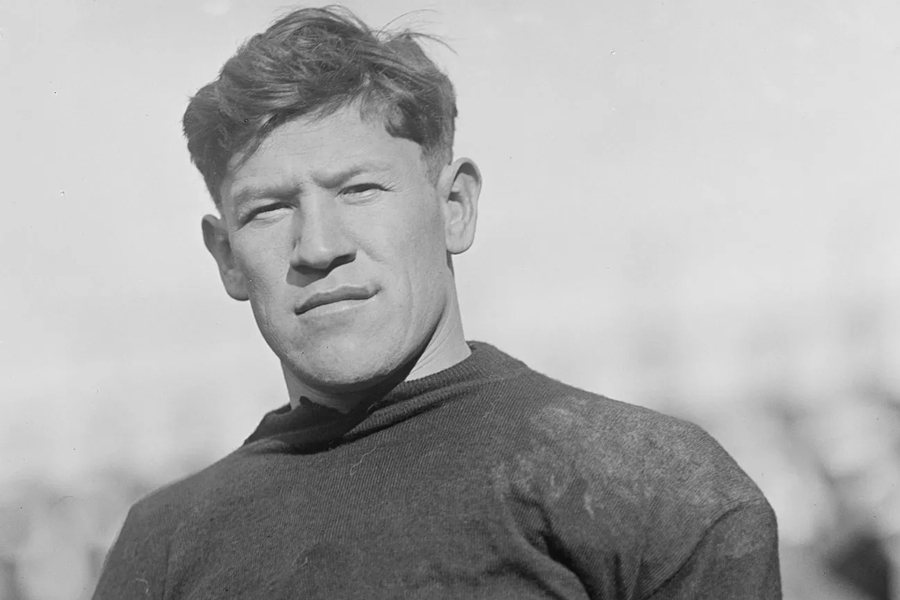
My name is James Francis Thorpe, although many people around the world remember me simply as Jim Thorpe. Within the Sac and Fox Nation, I was also known by my Native American name, Wa-Tho-Huk, commonly translated as “Bright Path” or “Path Lit by Lightning.” I was born near present-day Prague, Oklahoma, on the Sac and Fox reservation, in what was then Indian Territory. My birth date has been recorded differently by various sources, with May 22 and May 28, 1887 or 1888, appearing in historical accounts. My family and estate have generally recognized 1887.
I came from a family with deep Native American roots. My father, Hiram Thorpe, had Irish and Sac and Fox ancestry, while my mother, Charlotte Vieux, belonged to the Potawatomi and Kickapoo communities. Through my mother’s family, I was also connected to Chief Louis Vieux. My background shaped my identity and influenced the way I understood the world around me.
Growing up on the reservation was not always easy. My childhood was filled with family responsibilities, outdoor activities, and the challenges of living in a society that often treated Native Americans unfairly. I learned to appreciate physical strength, endurance, and determination at an early age. Those qualities eventually became important parts of my athletic career.
My parents had a large family, and I grew up alongside numerous brothers and sisters. Among my siblings were George, Rosetta, Mary, Margaret, Adeline, Edward, and my twin brother, Charlie. Unfortunately, Charlie died from pneumonia when we were still children. Losing my twin was one of the earliest painful experiences of my life.
The difficulties did not end there. My mother died from complications associated with childbirth around 1901, and my father passed away approximately three years later. Becoming an orphan at such a young age changed my life profoundly. I struggled emotionally, sometimes lost interest in school, and experienced periods of truancy. Like many young people facing personal tragedy, I did not always know where I belonged or what direction my life should take.
Discovering My Passion for Sports at Carlisle
My journey toward becoming an athlete developed during my education at the Carlisle Indian Industrial School in Pennsylvania. Carlisle was more than an educational institution. It was a place where Native American students were expected to adapt to mainstream American society, often under a strict assimilation system.
Despite the difficulties associated with that environment, Carlisle introduced me to opportunities that helped reveal my athletic abilities.
I discovered that I had a natural talent for running, jumping, and competing in physically demanding sports. Football eventually became one of my greatest passions. My speed, strength, coordination, and ability to understand the game made me an unusually versatile player.
One of the most influential people in my athletic development was coach Glenn “Pop” Warner. He recognized my potential and helped me become a stronger and more disciplined athlete. Under his guidance, I developed into one of the most important players in college football.
I became a three-time All-American football player at Carlisle. Our team competed against some of the strongest college programs in the country, and our victories attracted national attention.
One of the most memorable moments came in 1912, when Carlisle defeated the United States Military Academy, better known as Army. That game demonstrated the extraordinary talent of the Carlisle players and helped establish our team as a major force in American football.
My relationship with Warner was complicated at times, but his influence on my development was undeniable. He helped introduce my abilities to a much larger audience and played an important role in shaping my professional opportunities.
Winning Olympic Gold at the 1912 Stockholm Games
Although football brought me considerable recognition, my greatest international achievements came in track and field.
In 1912, I traveled to Stockholm, Sweden, to represent the United States at the Summer Olympic Games. I competed in several demanding events, including the pentathlon and decathlon. Both competitions required exceptional athletic versatility, endurance, and technical ability.
I won gold medals in both the pentathlon and decathlon, establishing myself as one of the outstanding athletes of the Olympic era.
My performance attracted international attention. Swedish King Gustav V reportedly praised my accomplishments, and my name became associated with extraordinary athletic versatility.
However, my Olympic success soon became overshadowed by controversy.
It was discovered that I had briefly played professional or semi-professional baseball before the Olympics. At the time, Olympic eligibility rules prohibited athletes who had received payment for participating in professional sports. Consequently, my Olympic medals were stripped in 1913.
The decision was devastating. I believed that my accomplishments on the field should have been judged by my performance, but the rules were applied differently, and my achievements were officially taken away.
For decades, my family and supporters continued fighting to restore my Olympic recognition. My children, particularly those who understood the importance of preserving my legacy, helped keep the campaign alive.
In 1982, the International Olympic Committee agreed to restore my medals, and the formal presentation took place in 1983. In 2022, the IOC further recognized me as the sole champion of the 1912 pentathlon and decathlon events, correcting the historical record.
Although I did not live to see these final developments, they represented an important victory for my family and for the recognition of Native American athletes.
My Professional Career in Football, Baseball, and Basketball
I never wanted to limit myself to a single sport. My athletic abilities allowed me to compete at a high level in several different disciplines.
After my Olympic success, I continued playing professional baseball. I joined the New York Giants and later played for other teams, including the Cincinnati Reds and Boston Braves. Professional baseball provided another opportunity to demonstrate my versatility, although my career was not always financially rewarding.
Football remained an important part of my professional life. I played for several teams during the early years of professional football, including the Canton Bulldogs. I became one of the recognizable figures in the sport during a period when professional football was still developing its identity.
I also played for the Oorang Indians, a professional football team composed entirely of Native American players. The team attracted attention because of its distinctive identity and connection to Native American culture. Playing with the Oorang Indians gave me another opportunity to compete alongside Native American athletes.
Basketball was another sport I pursued professionally. Although football and track and field brought me the greatest recognition, my participation in basketball further demonstrated my remarkable physical versatility.
In 1950, the Associated Press named me the greatest athlete of the first half of the twentieth century. That recognition reflected the extraordinary range of sports in which I had competed and the lasting influence I had on American athletics.
My Three Marriages and My Eight Children
Behind my public achievements was a complicated personal life. I married three times and had eight children, although one of my children died at a very young age.
My first wife was Iva Miller, a woman I had known during my time at Carlisle. We married in 1913, shortly after my Olympic achievements brought me national recognition.
Together, we had four children: James Jr., Gail, Charlotte Marie, and Grace Frances.
Our son James Jr. died when he was approximately two or three years old, during the influenza epidemic of 1918 or from an illness associated with that period. His death was another heartbreaking experience for our family.
My daughters Gail, Charlotte, and Grace remained important parts of my family story. Grace Frances Thorpe later became particularly involved in environmental causes and Native American rights. She helped preserve my memory and worked to ensure that my contributions were not forgotten.
My marriage to Iva eventually ended in divorce around 1925. The pressures of my athletic career, frequent travel, financial difficulties, and personal struggles placed considerable strain on our relationship.
Around 1925 or 1926, I married my second wife, Freeda Verona Kirkpatrick. We had four sons: Carl Phillip, William K., Richard A., and John R., who was commonly known as Jack.
My sons grew up with a father whose sporting achievements were widely recognized, but whose personal life was not always stable. I wanted to provide for them, although my professional commitments and financial circumstances sometimes made family life difficult.
My second marriage also ended in divorce, which became final in 1941.
In 1945, I married Patricia Gladys Askew, my third wife. Unlike my earlier marriages, this relationship continued until my death in 1953. We did not have children together.
Patricia remained with me during my final years and cared for me as my health and financial circumstances deteriorated. After my death, she continued supporting efforts to restore my Olympic honors.
My children represented an important part of my legacy. Although I experienced difficulties as a husband and father, my family remained central to my identity.
My Friends, Mentors, and Important Relationships
Throughout my life, several people influenced my development and helped shape my experiences.
Glenn “Pop” Warner was arguably the most significant mentor in my athletic career. His coaching helped me develop my football skills and brought national attention to my abilities. Our partnership contributed to Carlisle’s reputation as one of the strongest college football programs of its era.
However, our relationship was not without controversy, particularly concerning the circumstances surrounding my Olympic eligibility. The historical debate over my professional baseball experience and the subsequent loss of my medals remained connected to the broader story of my athletic career.
Another important figure was Louis Tewanima, a Hopi distance runner and fellow Carlisle athlete. He represented the United States at the 1912 Olympics and won a silver medal in the 10,000-meter race. We shared the experience of competing internationally while representing Native American communities.
I also knew Sylvester Long, who later became famous under the name Chief Buffalo Child Long Lance. We attended Carlisle during the same period, and some accounts describe us as close friends. His later life became controversial because of questions surrounding the Native American identity he presented publicly.
Other Carlisle teammates, including Gus Welch, also contributed to the friendships and sporting relationships that developed during those formative years.
My relationships extended beyond athletics as well. During my later years, I became connected with people in the entertainment industry and Hollywood. Nevertheless, I generally preferred a quieter personal life away from the constant attention that accompanied fame.
Financial Difficulties, Alcohol, and My Later Years
My sporting achievements did not guarantee financial security. Although I had competed professionally in several sports and achieved international recognition, maintaining a stable income became increasingly difficult.
The early professional sports world offered limited financial protection for athletes. Contracts, salaries, and retirement arrangements were very different from those available to modern professional players.
As my athletic career slowed, I struggled to find consistent employment. I also experienced difficulties with alcohol, which affected my personal relationships and contributed to the challenges of my later years.
My financial situation became particularly difficult as I grew older. Despite once being celebrated as one of America’s greatest athletes, I experienced periods of poverty and uncertainty.
I died on March 28, 1953, in Lomita, California, at approximately 65 years of age. My death was attributed to heart failure.
My passing marked the end of a remarkable but complicated life. I had experienced Olympic glory, professional sporting success, family tragedy, racial discrimination, financial hardship, and the long struggle for historical recognition.
My Legacy as an American and Native American Athlete
After my death, my remains were eventually placed in a memorial in Pennsylvania. Two Pennsylvania communities, Mauch Chunk and East Mauch Chunk, had combined to form a new borough that was renamed Jim Thorpe in my honor.
The decision reflected the public admiration surrounding my athletic achievements. However, the location of my burial later became controversial among members of my family and the Sac and Fox Nation, some of whom argued that my remains should be returned to Oklahoma, where my life began.
My legacy is about more than medals and sporting records. I represented a generation of Native American athletes who competed in a society that frequently placed barriers in their way.
My story also illustrates the complicated relationship between Native American identity, American sports, and historical recognition. I achieved extraordinary success while carrying the expectations and challenges associated with my heritage.
In 1950, I was recognized as the greatest athlete of the first half of the twentieth century. Decades later, the restoration of my Olympic medals and the IOC’s 2022 decision further strengthened my place in sporting history.
My daughters, sons, and other descendants continued protecting my memory. Their efforts helped ensure that my achievements would be remembered accurately.
I will always be remembered as an athlete who competed in football, baseball, basketball, and track and field, but my identity was never defined by sports alone. I was a son, a brother, a husband, a father, and a member of the Sac and Fox Nation.
My journey was not perfect, and my life included struggles that were rarely visible during my moments of athletic glory. Yet my story remains a reminder that determination, talent, and resilience can leave a lasting mark on history.
Frequently Asked Questions About Jim Thorpe
1. What was Jim Thorpe’s Native American name?
My Native American name was Wa-Tho-Huk, a name commonly translated as “Bright Path” or “Path Lit by Lightning.” I was a citizen of the Sac and Fox Nation.
2. How many Olympic gold medals did Jim Thorpe win?
I won two gold medals at the 1912 Stockholm Olympics, one in the pentathlon and another in the decathlon. The medals were later restored, and in 2022, the IOC recognized me as the sole champion in both events.
3. How many children did Jim Thorpe have?
I had eight children with my first two wives, Iva Miller and Freeda Verona Kirkpatrick. One son, James Jr., died during early childhood. I did not have children with my third wife, Patricia Gladys Askew.
4. Who was Jim Thorpe’s most influential coach?
Glenn “Pop” Warner was my most influential athletic mentor. He coached me at Carlisle Indian Industrial School and helped develop my exceptional football abilities.
5. Which professional sports did Jim Thorpe play?
I competed professionally in football, baseball, and basketball. I also achieved international recognition in track and field, particularly in the pentathlon and decathlon.
6. When did Jim Thorpe die?
I died on March 28, 1953, in Lomita, California. I was approximately 65 years old.
7. Why was Jim Thorpe’s Olympic recognition controversial?
My Olympic medals were stripped in 1913 after officials discovered that I had previously played professional baseball, which violated the amateur eligibility rules of that period. The IOC restored my medals in 1982, with a formal presentation in 1983, and recognized me as the sole champion in both events in 2022.